
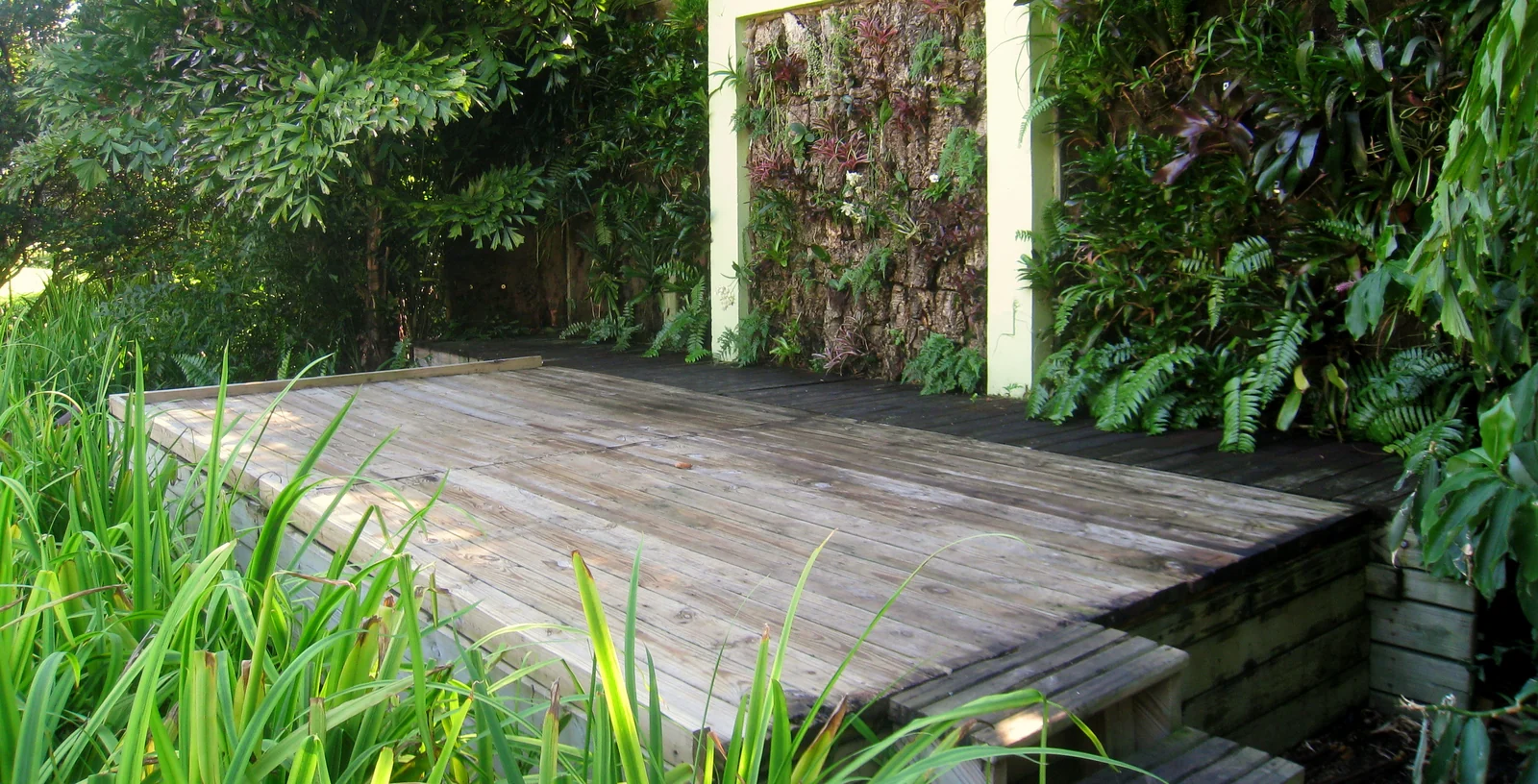
Composite Decking in Rochester Hills
Capped composite and cellular PVC laid on a frame built to carry it, gapped for the way a board moves through a Michigan year rather than to a rule of thumb.
Why does the frame decide a composite deck?
The boards are the part you choose and the part that lasts. The part that fails first is underneath them, and it is not covered by anyone's board warranty.
Joist spacing for the lay
16 inches on center for a straight run, 12 for a diagonal or a picture-frame border. Wood spacing under composite is how a floor starts to feel soft.
Gaps set by board temperature
An eighth to three-sixteenths side to side, a minimum three-sixteenths against a structure, tightened when the board is already hot.
Joist tape as standard
Butyl membrane along joist and beam tops that self-seals around every fastener. It protects the half of the deck you cannot replace cheaply.
One fastener system, not three
Clip, screw and grooved board from the same manufacturer, because mixing them creates both spacing problems and warranty problems.
Matched metal in treated framing
Hot-dip galvanized or stainless throughout. Copper-based preservative is roughly twice as corrosive to steel as the chemistry it replaced.
Boards with an evaluation report
ASTM D7032 testing and an ICC-ES report is what a building official relies on. It is a question you can ask any supplier.
Capped composite against pressure-treated, honestly
| What you are comparing | Pressure-treated | Capped composite |
|---|---|---|
| Up-front cost | Lowest of anything you can build a deck from | Materially higher per square foot |
| Finishing | Clean, brighten and re-stain on a cycle | None, ever |
| Michigan finishing window | Needs a dry stretch at 50 to 90 degrees | Not a factor |
| What it does in heat | Shrinks as it dries out after install | Expands and contracts thermally |
| Installed gap | Near-tight on wet boards, an eighth on kiln-dried | An eighth to three-sixteenths, tighter when hot |
| Joist spacing | 16 inches on center for most lays | 16 straight, 12 for diagonal |
| Surface underfoot in July | Stays closer to ambient | Dark boards run hot |
| How it ages | Silvers, checks, needs a finish to hold color | Holds color; the cap is the wearing surface |
| Where the money goes long term | Into finishing labor every few seasons | Into the up-front board price |
Why composite gapping matters more in a Rochester Hills year
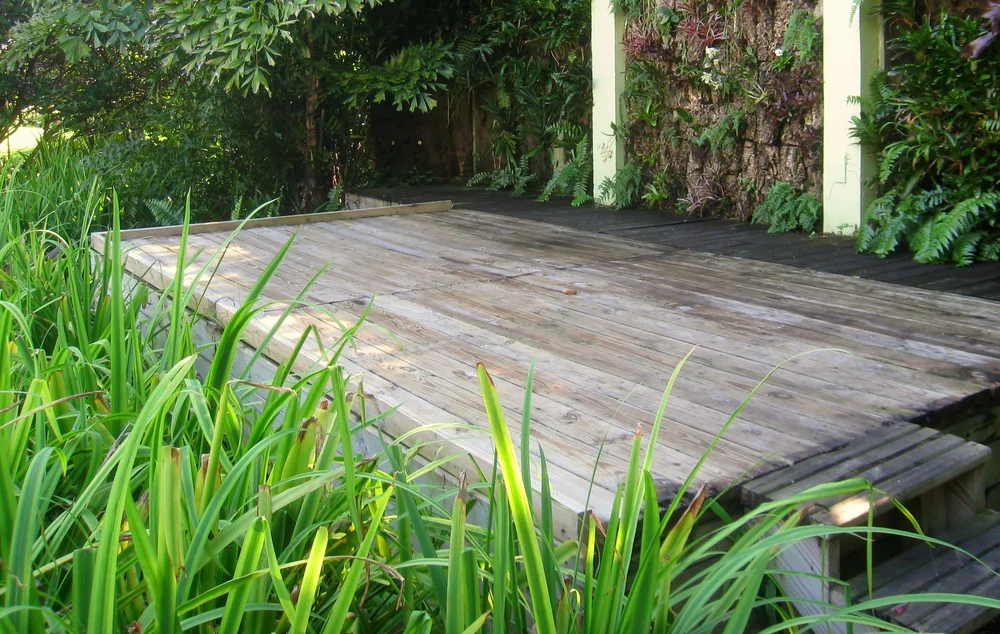
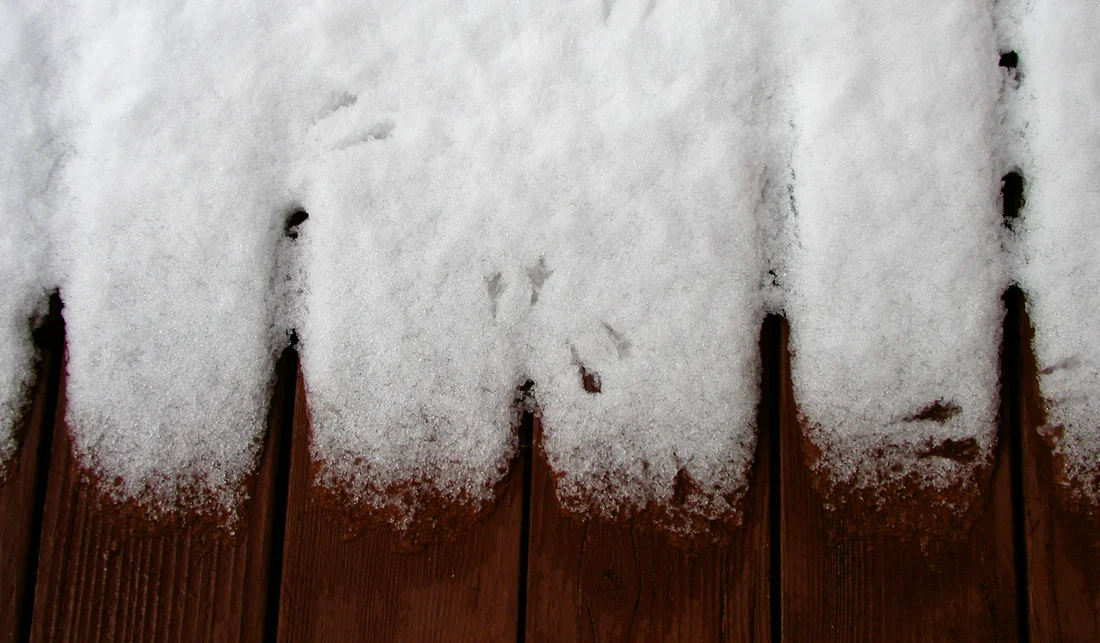
A composite board does the opposite of a wet pressure-treated one. It does not shrink as it dries; it expands and contracts with temperature, and around here the temperature swing across a year is enormous. The same deck can sit under snow in February and read well over ninety degrees on a dark board in July. Gap it too tight in the cold and it buckles in the heat. Gap it as though it were wet softwood and you get a floor you can drop keys through. Installers who work here read the board's own surface temperature on the day. We fit capped composite and PVC over framing built and taped for it.
- ✓ Board temperature checked
- ✓ Joist spacing set to the lay
- ✓ Joist tape on every beam
- ✓ One fastener system throughout
- ✓ Evaluation-reported boards
- ✓ Frame checked before boards
How a composite deck goes together here
The order matters: nothing gets laid until the structure under it is right.
Check the structure
Joist spacing, span, footing depth and the state of the frame, before any board is chosen.
Pick the board
Capped composite or cellular PVC, with an evaluation report, and a color that suits how much sun the deck takes.
Tape and set out
Joist tape along every joist and beam top, then the lay direction and the gap set to the day's board temperature.
Lay and finish
Hidden clips or plugged face screws from one system, then fascia, guards and the final inspection.
The composite numbers we actually work to
What else do we handle in Rochester Hills?
Everything below runs through the same drawings, the same footing depth and the same three inspections.

Deck Building
New decks drawn, permitted and framed to the city's adopted deck guide.
Learn more →
Deck Replacement
Tear-out, legal disposal and a new structure on new footings.
Learn more →
Composite Decking
Capped composite and PVC boards over a frame built to carry them.
Learn more →
Deck Repair
Ledgers, posts, joists, guards and stairs put back to code.
Learn more →
Deck Staining
Cleaning, brightening and finish, timed to the moisture, not the calendar.
Learn more →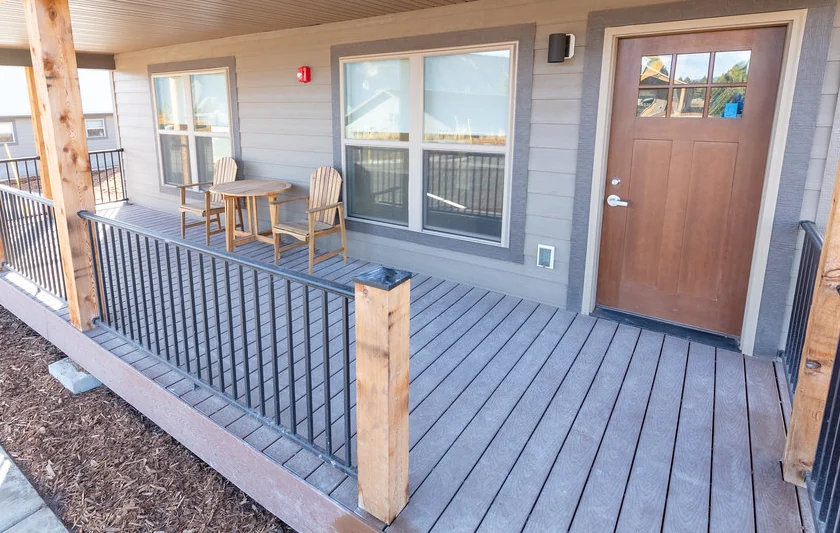
Deck Railings
Wood, composite, aluminum and cable guards that hold the code load.
Learn more →Composite decks across north Oakland County
Composite goes down all over Rochester Hills, and the newer plats such as Wildflower, Grosse Pines and Easthampton ask for it most. We fit it out to Rochester, Oakland Township, Auburn Hills, Lake Orion, Orion Township, Oxford, Leonard, Washington Township and Romeo. Same framing standard everywhere, no travel surcharge inside the ring.
Composite questions from Rochester Hills homeowners
Thinking composite for next season?
We will look at the frame you have, tell you honestly whether it can take the boards, and price both routes in writing so you can compare them side by side.