
Deck Repair in Rochester Hills
Ledgers, posts, joists, guards and stairs put back to what the current code asks for, on decks across Rochester Hills that were framed to an older rulebook.
Where does a deck actually fail first?
Almost never the boards you are looking at. The failures that matter start at the house, at grade, and at the guard posts, and they are all out of sight.
The ledger and what is behind it
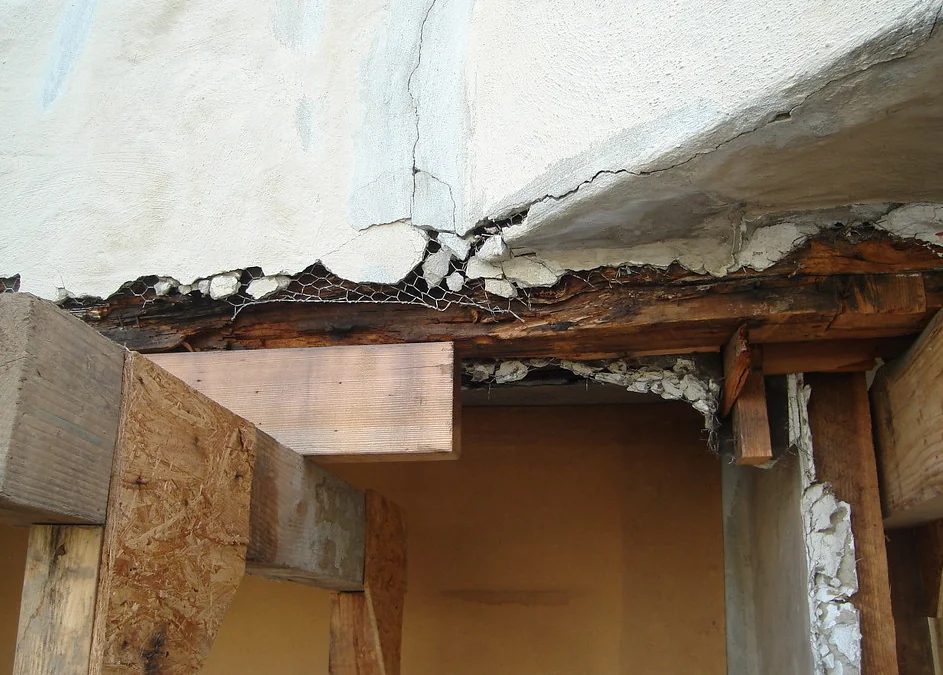
Water that gets behind an unflashed ledger rots the sheathing and band joist, and the bolts then have nothing left to grip. We open it up rather than guess.
Posts at grade
End grain sitting on or in wet ground wicks. A standoff base holds the post clear of the concrete, which is the difference between thirty years and ten.
Footings that never went deep enough
A pier short of 42 inches lifts every winter. We dig a test hole rather than take the original builder's word for it.
Guard posts that cannot take the load
A 4x4 notched or lag-screwed to a rim joist often cannot develop the 200 pound horizontal load the code asks for. Dedicated hold-down hardware exists for exactly this.
Stair risers out of tolerance
Three-eighths of an inch is the whole allowance across a flight. The bottom step is where it usually goes wrong, once the landing has settled.
Fasteners eaten from inside
Bare or electro-galvanized steel in modern treated lumber corrodes, and mixed metals corrode faster. Replacements go back hot-dip galvanized or stainless, matched.
What we probe and what a failure looks like
| What gets checked | What tells you it has gone |
|---|---|
| Support posts | Awl sinks in at grade; darkening or cracking around the base |
| Post bases | Post bearing straight on concrete or buried in soil, no standoff |
| Footings | Deck out of level at one corner; a test hole shows a shallow pier |
| Ledger board | Staining or soft sheathing behind it; nails rather than through-bolts |
| Ledger flashing | No metal over the board, or flashing that stops short at the ends |
| Band joist | Spongy behind the ledger; fasteners that turn without resistance |
| Beam-to-post joint | Beam bolted to the side of a post instead of bearing on top of it |
| Joist ends | Rot where the joist meets the ledger or beam; rusted hanger nails |
| Joist hangers | Rust bleed, missing nails, or hangers sized for a different joist |
| Guard posts | Rail moves when leaned on; post notched thin at the rim joist |
| Guard infill | A gap anywhere that lets a 4 inch sphere through, bottom rail included |
| Stair stringers | Soft at the bottom cut; stringer sitting flat on soil |
| Riser heights | More than 3/8 inch between the tallest and shortest in a flight |
| Handrail | Missing on a flight of four or more risers, or not graspable |
| Decking and fasteners | Cupping, splitting, popped screws, corroded heads |
Why repairs here cluster around the same six things
A deck is a small structure that carries people and then goes uninspected for thirty years. In Rochester Hills it also takes a hard freeze-thaw cycle every year, which the state code table classes as severe weathering. So the same faults keep coming back: a pier that never reached 42 inches walking a corner out of level, an unflashed ledger quietly rotting the band joist behind it, posts wicking at grade, guard posts that were never detailed to take a horizontal load, corroded fixings, and a bottom stair riser out of tolerance. We repair all six, and say plainly when repair is the wrong answer.
- ✓ Awl probe, not eyeball
- ✓ Test hole at a pier
- ✓ Ledger opened and flashed
- ✓ Hold-down hardware at guards
- ✓ Matched metal replacements
- ✓ Written findings either way
How a repair gets scoped here
Probe first, price second. A repair quote written from the driveway is a guess.
Probe and photograph
Awl through posts, joists, stringers and the ledger area, with photographs of anything soft.
Open what has to be opened
Flashing and ledger connections get exposed, because the damage that matters is behind them.
Scope in writing
What is sound, what gets replaced, and whether replacement is the better spend.
Repair and re-check
Members replaced, connections re-made in matched metal, guards and stairs brought back within tolerance.
If your deck needs three boards and a handrail, that is what we will tell you and what we will charge for. If it needs a new frame, you get that in writing too, with the reason and the photograph. I would rather lose a job than sell a repair I would not stand on.
What else do we handle in Rochester Hills?
Everything below runs through the same drawings, the same footing depth and the same three inspections.
Deck Building
New decks drawn, permitted and framed to the city's adopted deck guide.
Learn more →
Deck Replacement
Tear-out, legal disposal and a new structure on new footings.
Learn more →
Composite Decking
Capped composite and PVC boards over a frame built to carry them.
Learn more →
Deck Repair
Ledgers, posts, joists, guards and stairs put back to code.
Learn more →
Deck Staining
Cleaning, brightening and finish, timed to the moisture, not the calendar.
Learn more →
Deck Railings
Wood, composite, aluminum and cable guards that hold the code load.
Learn more →Repairs across Rochester Hills and around it
Repair calls come from all over Rochester Hills, and heavily from the mid-1980s plats such as Eddington Farms, Hamlin Place Farms and Bogart's Place. We also work Rochester, Oakland Township, Auburn Hills, Lake Orion, Orion Township, Oxford, Addison Township, Leonard, Washington Township and Romeo, with no travel surcharge inside that ring.
Repair questions from Rochester Hills homeowners
Something moving that should not be?
Call and we will come and probe it. You get the findings in writing, with the parts that are sound named as well as the parts that are not.